
 Image 1 of 2
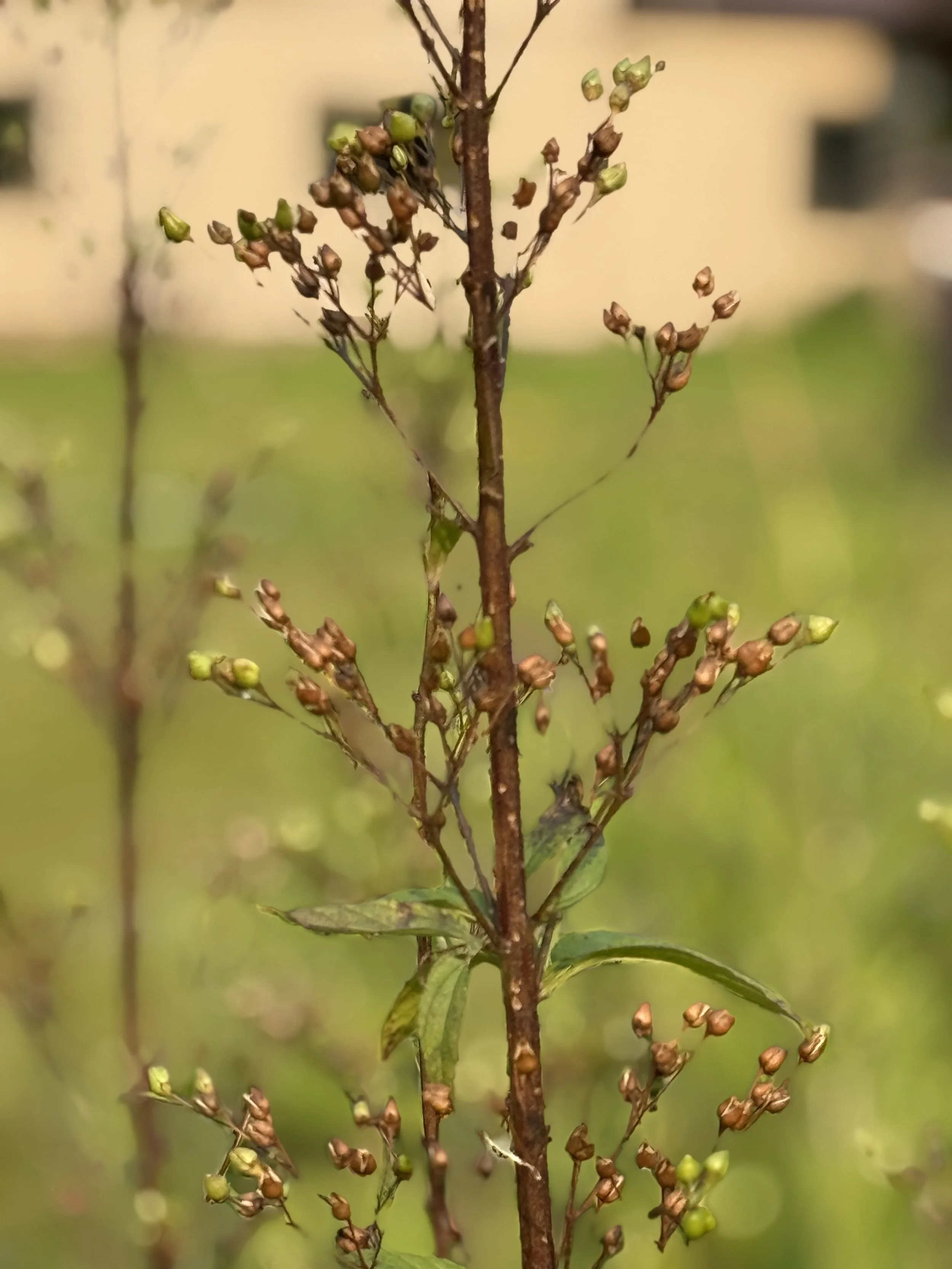 Image 2 of 2
Maryland Figwort (Scrophularia marilandica) is a perennial wildflower that thrives in USDA hardiness zones 4-8 and is native to North America.
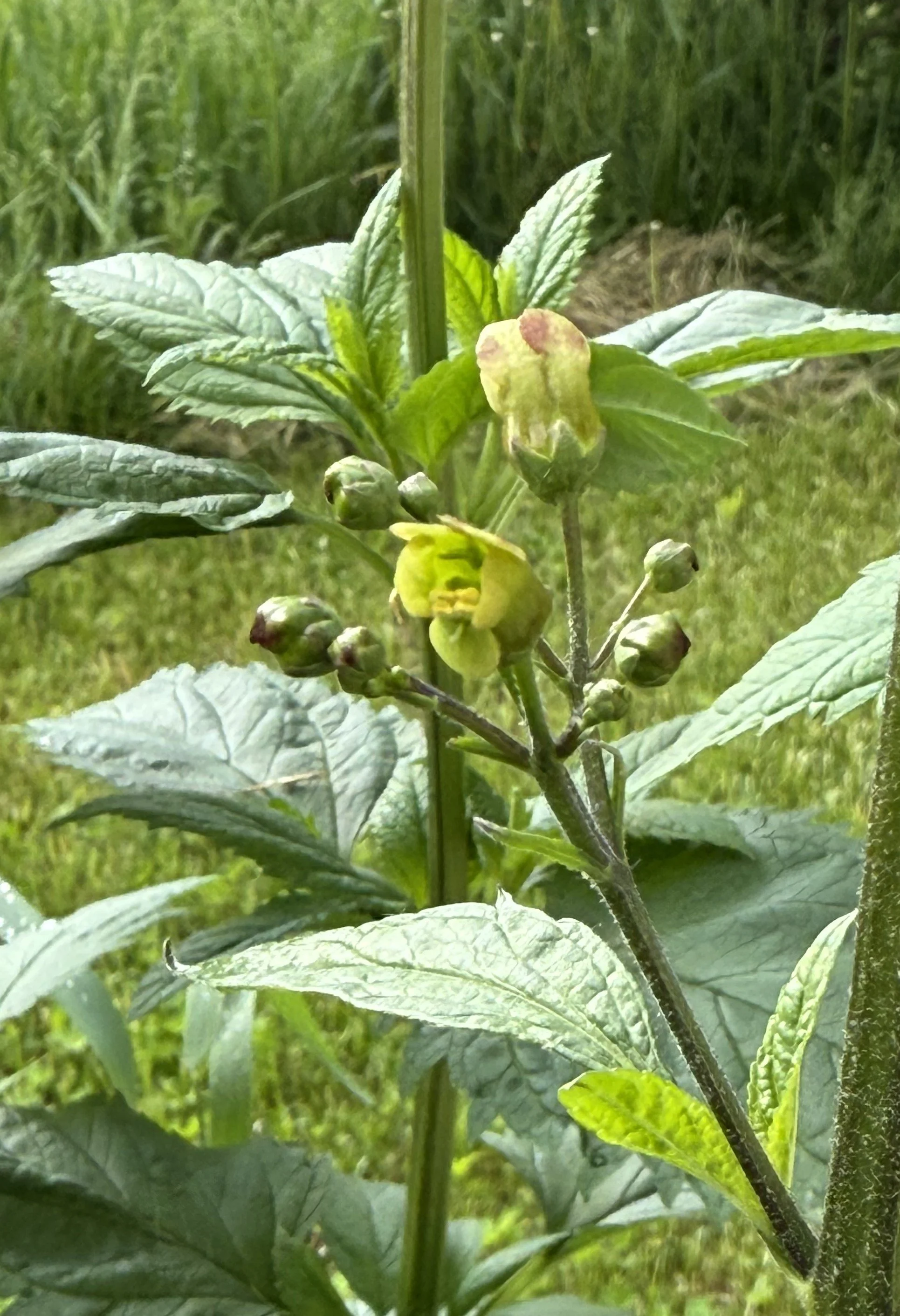
The flowers are small and tubular, measuring about 1/3 inch long, with a round base and five rounded lobes. The upper lobes are the longest, while the lower lobe curves downward. Although the flowers are not very showy, they are rich in nectar. The exterior of the flower is greenish-brown, while the interior is reddish-brown with four stout yellow stamens. Maryland Figwort blooms from late summer to fall, producing a faint smoky scent. When crushed, the foliage emits a strong odor. This plant is among the most nectar-producing plants in North America and provides essential, protein-rich pollen. It is also considered an excellent, long-lasting filler in floral arrangements; both the flowers and stems can be dried and are valued by florists for their rustic appeal.
Maryland Figwort attracts bees, butterflies, wasps, and hummingbirds, and it serves as a host plant for several butterfly and moth species. It prefers full sun to part shade and can grow to a mature height of 5-10 feet, with a spread of 3-6 feet. The plant thrives in fertile, moist, well-drained soils.
The leaves are opposite, measuring about 7 inches long and 3.5 inches wide. They are toothed and range in shape from egg to heart with pointed tips. The stem is square and features open branching. The fruit is a dull brown, tear-shaped capsule that contains numerous tiny brownish-black seeds. When ripe, the capsule splits in two.
The root system consists of knobby tubers that historically resemble figs. The plant spreads through tuberous rhizomes and has a dense system of fibrous roots that help it absorb moisture and anchor itself in place.
Maryland Figwort has several companion plants, including wild geranium, columbine, blue-stemmed goldenrod, and moisture-loving ferns. It propagates by seed or division and is highly resistant to deer and rabbits. Division is best done in spring or fall.
Historically, Maryland Figwort was used to treat hemorrhoids, a condition once referred to as "figs." In the 1800s, an infusion of the roots was consumed to address insomnia and anxiety.
Maryland Figwort (Scrophularia marilandica) is a perennial wildflower that thrives in USDA hardiness zones 4-8 and is native to North America.
The flowers are small and tubular, measuring about 1/3 inch long, with a round base and five rounded lobes. The upper lobes are the longest, while the lower lobe curves downward. Although the flowers are not very showy, they are rich in nectar. The exterior of the flower is greenish-brown, while the interior is reddish-brown with four stout yellow stamens. Maryland Figwort blooms from late summer to fall, producing a faint smoky scent. When crushed, the foliage emits a strong odor. This plant is among the most nectar-producing plants in North America and provides essential, protein-rich pollen. It is also considered an excellent, long-lasting filler in floral arrangements; both the flowers and stems can be dried and are valued by florists for their rustic appeal.
Maryland Figwort attracts bees, butterflies, wasps, and hummingbirds, and it serves as a host plant for several butterfly and moth species. It prefers full sun to part shade and can grow to a mature height of 5-10 feet, with a spread of 3-6 feet. The plant thrives in fertile, moist, well-drained soils.
The leaves are opposite, measuring about 7 inches long and 3.5 inches wide. They are toothed and range in shape from egg to heart with pointed tips. The stem is square and features open branching. The fruit is a dull brown, tear-shaped capsule that contains numerous tiny brownish-black seeds. When ripe, the capsule splits in two.
The root system consists of knobby tubers that historically resemble figs. The plant spreads through tuberous rhizomes and has a dense system of fibrous roots that help it absorb moisture and anchor itself in place.
Maryland Figwort has several companion plants, including wild geranium, columbine, blue-stemmed goldenrod, and moisture-loving ferns. It propagates by seed or division and is highly resistant to deer and rabbits. Division is best done in spring or fall.
Historically, Maryland Figwort was used to treat hemorrhoids, a condition once referred to as "figs." In the 1800s, an infusion of the roots was consumed to address insomnia and anxiety.